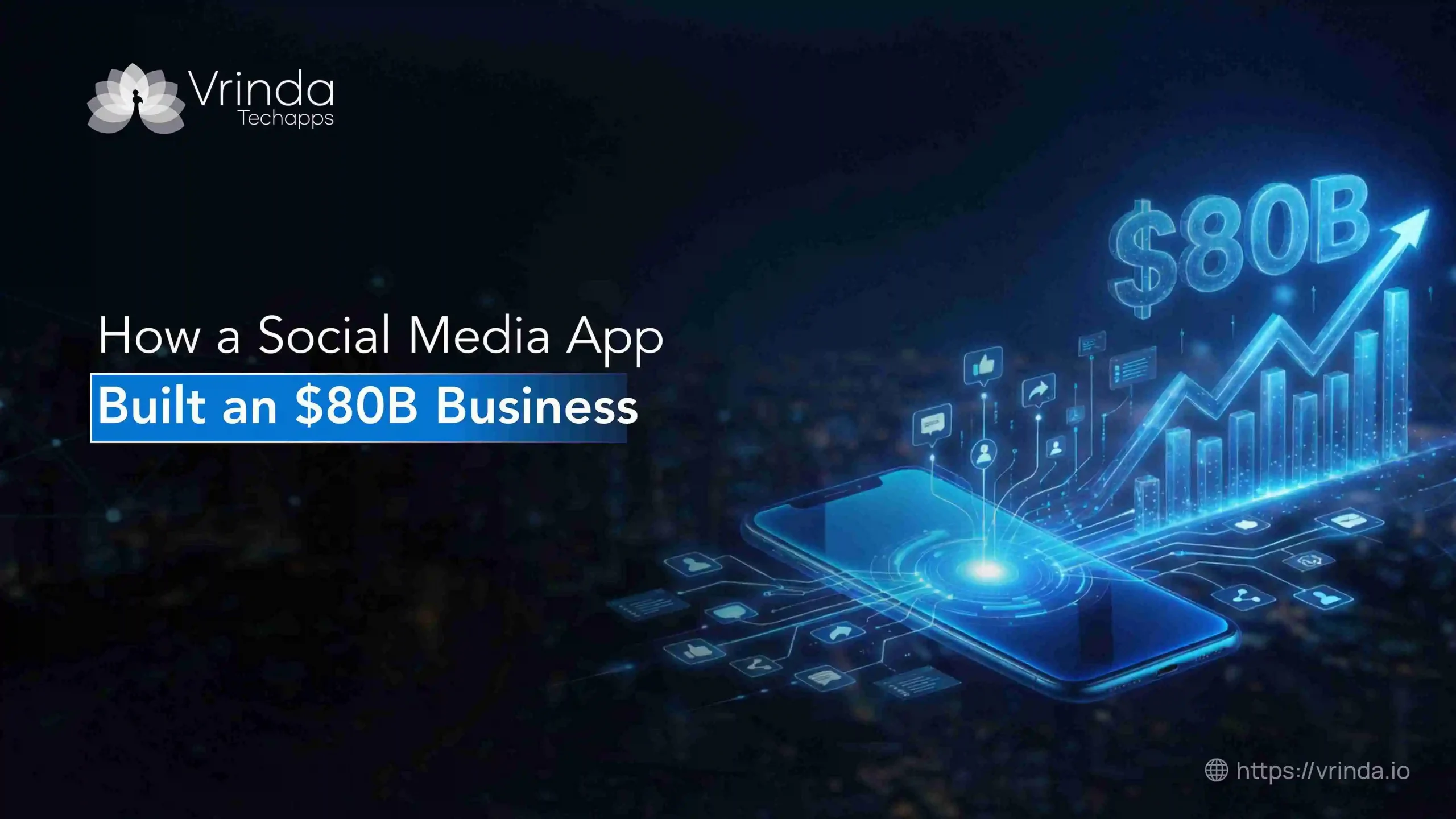
How a Social Media App Built an $80B Business
- January 14, 2026
- 10 min read
This social media app didn’t become powerful because people loved posting. People loved posting because the app made it effortless on mobile. That distinction matters more than you think. And if you want to understand why modern apps either scale beautifully or collapse under pressure, Mobile App Development Miami shows you the answer in real time.
How This App Slipped Into Everyone’s Pocket
This social media app didn’t explode because it tried to do everything. It exploded because it did one thing stupidly well. Back in October 2010, when it launched in San Francisco, it wasn’t a social network. It was a mobile camera experience. Clean interface. Cool filters. No confusion. You didn’t need to learn it. You just felt it.
That’s why photographers, designers, and early creators picked it up first. Influencers didn’t exist yet, but the app quietly created them anyway. This is lesson number one every Mobile App Development Miami company should tattoo somewhere: People don’t fall in love with features. They fall in love with how an app makes them feel on their phone.
Why the App Went Viral Without Trying Too Hard
The app didn’t grow by keeping people trapped inside it. It grew by letting content leave. One tap to Facebook. One tap to Twitter. Every photo quietly turned into a free ad. That simple decision made it viral, the good kind. It adapted again and again.
- Stories, to counter disappearing content platforms
- Short-form video to compete with fast entertainment apps
- Shopping, to turn attention into action
- Direct messaging and live features, to deepen the community
- Discovery algorithms, to keep users engaged beyond who they follow
Today, this social media app is part of a global tech giant, led by a dedicated product-focused leadership team, and used by over 2 billion people every month. Its largest audiences sit in India, the United States, and Brazil, and its business reflects that scale.
Projected global revenue for 2025: $65B–$83.6B
Projected US revenue alone: $29–$32B
All of it traces back to a single principle: mobile-first, always. That’s why this app isn’t just a social platform. It’s a masterclass in Mobile App Development Miami thinking long before the term even existed.
Why Miami Became the Perfect Playground
Now let’s come back to Miami. Miami is a city built for visuals. Fashion, food, fitness, travel, everything here wants to be seen. That’s why creators didn’t just grow audiences here, they built careers.
Some Miami creators earn:
A few hundred dollars per post
Others earn $10,000–$25,000+ per sponsored post
Many make $5,000–$10,000 per month
ZipRecruiter shows platform-focused creator roles averaging ~$2,759/month, with broader influencer roles around $5,900/month. All of this depends on one invisible thing: apps that never fail on mobile. And that’s where businesses started paying attention.
This Is Where the Story Changes
Here’s what most people don’t connect. This app didn’t just create creators. It created expectations. Fast loading. No crashes. Media-heavy feeds that just work.
That’s why companies building apps, especially in cities like Miami, suddenly realized they weren’t competing with other apps. They were competing with this level of performance. That’s when searches for Mobile App Development Miami started meaning something very different.
Why This App Forced Businesses to Take App Development Seriously
Here’s the thing. This app changed behavior forever, and most people don’t even realize it. It didn’t just teach people how to post. It trained them on how apps should behave. Once users experienced this level of smoothness every single day, patience disappeared. Not just for social apps. For all apps.
That’s when businesses felt the shift. Suddenly, launching an app wasn’t enough. Having features wasn’t enough. Even having a good idea wasn’t enough.
The real question became:
Can this app handle real people, real content, and real traffic without breaking? This social media app proved that great apps aren’t built by accident.
They’re built by teams who obsess over performance, scalability, and user behaviour on mobile long before growth arrives. This is exactly why modern businesses stopped treating app development as a task and started treating it as a long-term capability. That’s also why conversations around Mobile App Development Miami shifted. They stopped being about where apps are built and started being about how well they hold up once users arrive.
The Missing Bridge
This is the uncomfortable truth most businesses eventually run into. You can admire this app all day. You can study its features, its growth, its influence. But none of that matters unless the people building your app understand why it worked, not just what it built.
At some point, every serious product reaches the same fork in the road: either keep shipping features and hope performance holds, or bring in teams who’ve already seen what happens when scale hits. That’s the moment app development stops being a service and starts becoming a responsibility.
Here’s what separates Vrinda from just another agency. We don’t bring hours. We bring consistency. Teams that show up. Code that stays clean. Products that don’t panic under growth.
That’s why businesses across industries trust Vrinda to drive traction, not just launches. In a world where users compare everything to this social media app, Vrinda builds apps that don’t feel less than. That’s the real advantage of Mobile App Development Miami done right.
The Reel Ending
This app didn’t win because it was social. Miami didn’t win because it was trendy. They won because they respected mobile behaviour before anyone else.
If you’re building anything today, a platform, a marketplace, or a service, your users are already trained by the best mobile experiences in the world.
They expect:
Speed
Simplicity
Visual clarity
Zero friction
And the companies that understand Mobile App Development Miami aren’t copying this app. They’re learning why it worked. That’s exactly what Vrinda Techapps does across industries, across use cases, and across scales.
Not louder apps. Better ones.